In the quiet of early morning, before the world fully stirs, the most private space in the home comes alive: the bathroom. It’s a place of ritual, reflection and renewal.
In 2026, the bathroom has moved beyond sanctuary to become a fully integrated wellness environment — where technology, architecture, and emotion converge with even greater subtlety. It is no longer a hidden corner of the house; it is a deliberate stage for restoration and understated luxury.
Across Pune’s evolving design landscape — from Kalyani Nagar penthouses to Baner villas — luxury bathrooms continue to emerge as deeply personal retreats. They mirror the rhythm of contemporary life: hyper-connected outside, intentionally calm within. At Studio Mavi, this is more than a design trend; it reflects a cultural shift toward mindful living expressed through materiality, light, and spatial silence.
The Shift: From Utility to Experience
Bathrooms have long been shaped by function — tile grids, mirrors, plumbing. But by 2026, the design conversation has matured further. The bathroom is no longer simply a wellness-inspired space; it is a curated experience shaped by mood, habit, and ritual.
Design forecasts for 2026 point to immersive spa-inspired layouts, acoustic control, invisible storage, and integrated scent systems. Luxury homes in Pune are adopting these ideas not as add-ons but as architectural essentials. Bathrooms are now conceived as wellness suites from the outset — open yet intimate, layered yet restrained.
The result is a space that is not merely seen but felt: a sensory choreography of light, sound, texture, and water.
Smart Showers: Personalisation at Its Peak
Technology has become quieter, smarter, and more intuitive. By 2026, smart showers have evolved from novelty to expectation. Temperature memory, humidity-responsive ventilation, aromatherapy infusion, and voice or app-based control systems now operate seamlessly in the background.
Advanced systems learn routines — adjusting water pressure for morning energy or evening relaxation. Steam functions sync with lighting and soundscapes, transforming daily routines into immersive rituals.
In Pune’s climate, these features also serve practical needs. Smart ventilation manages humidity and mold risk, while digital thermostats reduce water consumption. Technology, in this context, doesn’t dominate the design — it dissolves into it.
Spa Zones at Home: Wellness as Architecture
If 2025 introduced spa corners, 2026 embeds wellness directly into spatial planning. Bathrooms now include dedicated zones for recovery and stillness: steam enclosures, hydrotherapy tubs, infrared panels, and compact cold-plunge installations.
The emphasis is emotional accessibility. Instead of reserving wellness for occasional retreats, homeowners want daily micro-rituals — a steam session after work, a quiet soak at night, a sensory reset before the day begins.
Designers are responding by blurring boundaries between bedroom, dressing, and bathing zones. Materials and lighting flow seamlessly, creating continuity rather than separation. The bathroom becomes less a room and more a private wellness landscape.
Material Matters: Texture as Emotion
By 2026, luxury is defined by tactility and authenticity. Materials are chosen not only for aesthetics but for emotional resonance.
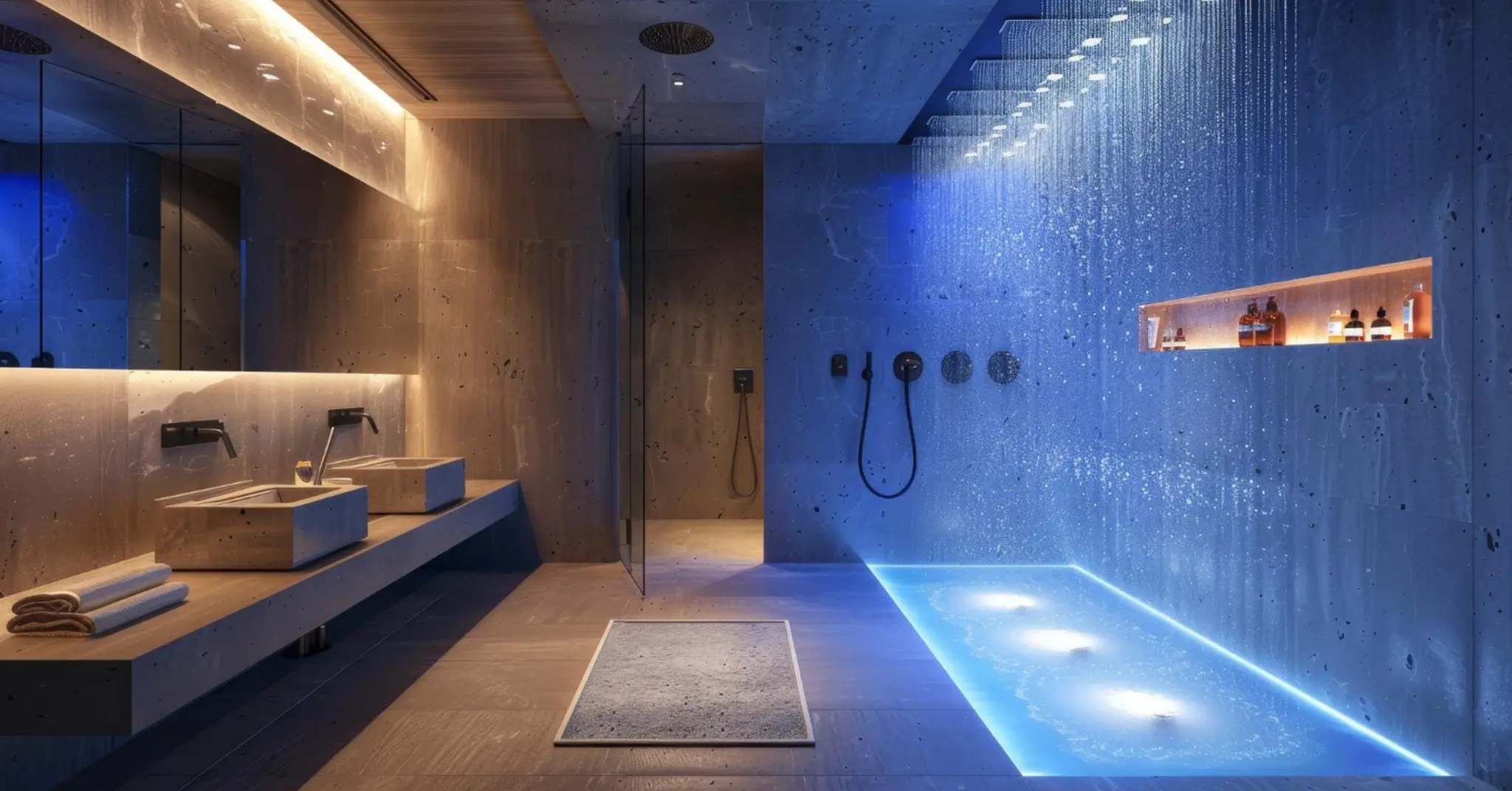
Tadelakt walls, zellige tiles, textured stone, fluted glass, and brushed metals remain central. But the palette is becoming warmer and more grounded. Honed finishes and hand-worked surfaces diffuse light softly and invite touch.
For Pune homes, contextual materials remain key:
- Kota and Jaisalmer stone bring earthy calm.
- Natural wood introduces warmth against stone.
- Brushed brass and bronze develop character over time.
This aesthetic is less about perfection and more about presence — a quiet glamour rooted in material honesty.
Light and Atmosphere: Invisible Architecture
Lighting design in 2026 is increasingly cinematic. It shifts gradually through the day, responding to circadian rhythms and user habits.
Layered systems remain essential:
- Task lighting near mirrors for clarity.
- Ambient coves for soft diffusion.
- Hidden accent lighting to create depth and shadow.
Natural light continues to shape luxury bathrooms in Pune. Skylights, perforated screens, and clerestory windows introduce changing daylight that animates textures throughout the day. At night, warm dimmable lighting transforms the space into a meditative retreat.
In contemporary luxury design, light is not functional alone — it is emotional architecture.
Sustainability as a Marker of Taste
By 2026, sustainability is inseparable from luxury. High-end bathrooms now integrate water-saving fixtures, recycled materials, low-VOC finishes, and energy-efficient systems as standard.
Greywater recycling, sensor-based lighting, and smart heating ensure comfort without excess. Pune’s design-conscious homeowners increasingly view sustainability not as compromise but as refinement.
True luxury, after all, is responsibility expressed with elegance.
Designing the Luxury Bathroom: A Spatial Composition
Creating a luxury bathroom in 2026 is about orchestration — rhythm, pause, balance.
The Entrance
A calm transition zone sets the tone. Stone flooring, soft lighting, and sculptural vanities introduce quiet.
The Shower and Steam Zone
Rain showers, body jets, and steam enclosures create immersion. Built-in seating and textured niches add comfort and architectural depth.
The Stillness Zone
Freestanding tubs near windows or courtyards become sculptural anchors — spaces for reflection rather than display.
The Lighting Composition
Layered lighting allows the mood to shift throughout the day, turning brightness into a tool for relaxation.
The Material Palette
Stone, wood, glass, and metal are balanced with restraint. Texture leads; ornament recedes.
The Sensory Details
Scent, sound, and textiles complete the experience — subtle yet essential.
The luxury bathroom becomes a composed environment where each element supports the overall atmosphere of calm.
The Pune Perspective: Wellness as Identity
As Pune continues to grow as a city of design, culture, and technology, its homes are embracing wellness-driven architecture. Luxury bathrooms reflect this shift toward depth over display.
Influenced by the region’s architectural heritage — courtyards, stone textures, filtered light — contemporary bathrooms reinterpret these elements through spa-like layouts and material warmth. Open planning, gentle transitions, and natural finishes connect modern living with timeless spatial calm.
In this context, the bathroom becomes the most personal expression of luxury — quiet, intentional, and deeply restorative.
Final Thoughts: The Intimacy of Future Luxury
Luxury in 2026 is not about scale but sensitivity. The bathroom has become the most human space in the home — tactile, private, and emotionally resonant.
When light moves softly across stone, when steam carries the scent of sandalwood, when water responds intuitively to touch — design becomes experience.
At Studio Mavi, this evolution is not about indulgence but about care. Spaces that restore rather than impress. Spaces that slow rather than stimulate.
The bathroom, once the smallest and most hidden room, now stands as the most considered — a sanctuary shaped by design, silence, and the rituals of everyday life.