Best material for kitchen cabinets is one of the most searched topics in modular kitchen design because cabinet durability directly affects how well a kitchen performs over time. Kitchen cabinets are exposed to moisture, heat, oil, cleaning chemicals, and constant daily usage. If the wrong material is selected, even an expensive kitchen can begin showing signs of damage within a few years.
Swollen shutters, peeling laminates, loose hinges, and warped panels are some of the most common problems caused by poor cabinet material choices. This is why professional kitchen design focuses not only on appearance, but also on structural performance and moisture resistance.
At Studio Mavi, regarded as one of the best interior design studios in Pune, kitchen cabinet materials are selected through a balance of durability, maintenance, climate suitability, and long-term value.
This guide explains the best kitchen cabinet materials, plywood grades, cabinet finishes, and the materials homeowners should avoid.
Why Kitchen Cabinet Material Matters So Much
Kitchen cabinets form the structural framework of the kitchen. They support countertops, hardware systems, storage loads, and appliances while constantly being exposed to steam, humidity, and cleaning.
Studies in furniture engineering and building materials consistently show that moisture absorption is one of the primary causes of cabinet failure. Concepts such as plywood, engineered wood and laminate surfaces are widely documented in material science and Wikipedia references.
Poor cabinet materials often result in:
- Moisture swelling
- Surface peeling
- Hardware loosening
- Reduced structural life
A well-designed modular kitchen therefore depends heavily on selecting the right base material and finish combination.
Understanding Plywood Grades for Kitchens
Plywood remains the preferred structural material for most high-quality modular kitchens because of its layered construction and strength. However, not all plywood grades perform equally.
MR Grade Plywood
MR stands for Moisture Resistant plywood.
It is commonly used in:
- Bedroom furniture
- Dry interior spaces
- Low-moisture environments
Although more affordable, MR plywood is not ideal for kitchens because prolonged exposure to humidity and steam can eventually weaken it.
BWR Grade Plywood
BWR stands for Boiling Water Resistant plywood.
This grade offers:
- Better moisture resistance
- Improved durability
- Higher structural stability
BWR plywood works well for:
- Upper kitchen cabinets
- Moderately exposed kitchen zones
It is a significant improvement over MR plywood for modular kitchens.
BWP Grade Plywood
BWP stands for Boiling Water Proof plywood and is considered the highest-performing plywood category commonly used in kitchens.
BWP plywood offers:
- Excellent moisture resistance
- Strong structural durability
- Better long-term performance in humid conditions
This makes it ideal for:
- Sink units
- Base cabinets
- Heavy-use kitchens
- Homes in humid climates
At Studio Mavi, BWP plywood is frequently specified for kitchens where durability and long-term performance are priorities.
Why Plywood Performs Better Than MDF in Kitchens
MDF (Medium Density Fibreboard) is widely used because of its smooth surface and lower cost. However, it performs poorly in wet and humid environments.
MDF tends to:
- Absorb moisture quickly
- Swell when exposed to water
- Lose strength over time
In contrast, plywood’s cross-layered structure provides greater stability and resistance to expansion.
For this reason, Studio Mavi generally avoids MDF for structural kitchen cabinets, especially near sinks and lower storage areas.
Best Cabinet Finishes for Indian Kitchens
The finish applied over kitchen cabinets influences durability, maintenance, and overall appearance.
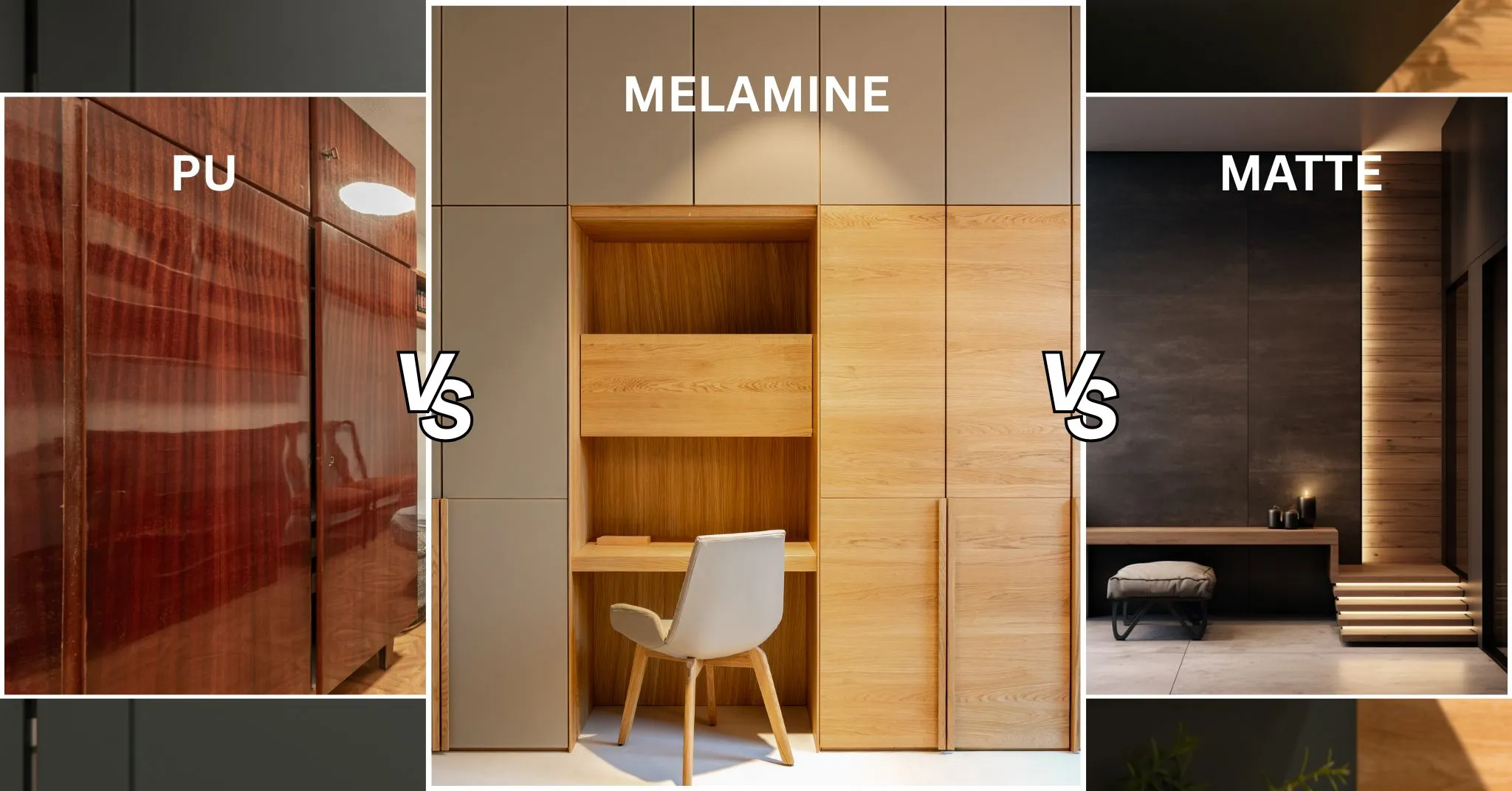
Matte Laminates
Matte laminates are among the most practical finishes for Indian kitchens because they:
- Resist fingerprints
- Hide dust better
- Require less maintenance
- Age gracefully over time
Their subtle texture also creates a more refined and modern appearance.
High-Pressure Laminates (HPL)
High-pressure laminates are engineered for durability and heavy use.
They offer:
- Scratch resistance
- Heat resistance
- Better impact performance
- Easy maintenance
Studio Mavi frequently recommends HPL finishes for kitchens because they combine practicality with design flexibility.
Acrylic Finishes
Acrylic kitchens are popular for their glossy, reflective look. They create a sleek contemporary aesthetic but require higher maintenance.
Common issues include:
- Visible fingerprints
- Surface scratches
- Frequent cleaning requirements
Acrylic works best in homes where visual impact is prioritised over maintenance convenience.
Veneer Finishes
Natural wood veneer adds warmth and sophistication but requires careful upkeep.
Veneer is better suited for:
- Dry kitchen zones
- Accent cabinetry
- Decorative sections
Studio Mavi typically uses veneer selectively rather than across the entire kitchen.
Why Edge Banding Is Critical
Edge banding seals exposed board edges and prevents moisture penetration.
Poor edge banding often causes:
- Laminate peeling
- Water seepage
- Board swelling
High-quality PVC or ABS edge banding improves:
- Moisture resistance
- Finish durability
- Long-term cabinet stability
This small detail significantly affects cabinet lifespan.
Hardware Quality Matters as Much as Material
Even the best plywood will fail if paired with poor hardware.
Kitchen cabinets should use:
- Soft-close hinges
- Corrosion-resistant channels
- Stainless steel fittings
- Moisture-resistant screws
Mechanical wear from repeated use is one of the biggest causes of kitchen deterioration.
Studio Mavi integrates hardware planning alongside material selection to ensure long-term functionality.
Materials Homeowners Should Avoid
Particle Board in Kitchens
Particle board absorbs moisture rapidly and deteriorates quickly in humid conditions.
Low-Grade MDF Near Water Sources
Lower-quality MDF is highly vulnerable to swelling and edge damage.
Cheap Gloss Laminates
Low-cost glossy surfaces often scratch easily and highlight dust, oil stains, and fingerprints.
Weak Hardware Systems
Low-quality hinges and channels significantly reduce kitchen lifespan regardless of cabinet material quality.
Studio Mavi prioritises reliable material systems that continue performing well years after installation.
Long-Term Value vs Initial Cost
Many homeowners focus only on upfront cabinet costs. However, poor-quality kitchens often require:
- Frequent repairs
- Hinge replacements
- Laminate repairs
- Cabinet realignment
Investing in:
- Better plywood
- High-quality laminates
- Durable hardware
usually reduces maintenance costs significantly over time.
A modular kitchen should be viewed as a long-term infrastructure investment rather than just a decorative upgrade.
Why Professional Material Planning Matters
Kitchen materials do not function independently. Cabinet boards, laminates, adhesives, edge banding, and hardware must all work together.
Professional planning ensures:
- Moisture resistance compatibility
- Better structural stability
- Reduced maintenance issues
- Longer cabinet life
As one of the best interior design studios in Pune, Studio Mavi approaches kitchen design through a combination of material intelligence, technical detailing, and long-term usability.
Final Thoughts
The best material for kitchen cabinets is not necessarily the most expensive—it is the one that performs reliably under real kitchen conditions.
For most Indian homes, BWP plywood combined with durable laminates and high-quality hardware provides the best balance of:
- Moisture resistance
- Durability
- Maintenance
- Long-term value
By focusing on structural quality rather than trends alone, homeowners can create kitchens that remain functional, durable, and visually refined for many years.
FAQs
Which plywood is best for kitchen cabinets?
BWP-grade plywood is the most durable and moisture-resistant option.
Is MDF good for modular kitchens?
MDF is generally not recommended for moisture-prone kitchen areas.
Which kitchen cabinet finish is easiest to maintain?
Matte laminates are among the easiest finishes to clean and maintain.
Are acrylic kitchen cabinets durable?
Yes, but they require more maintenance due to fingerprints and scratches.
Why is edge banding important in kitchens?
It prevents moisture from entering cabinet panels and improves durability.