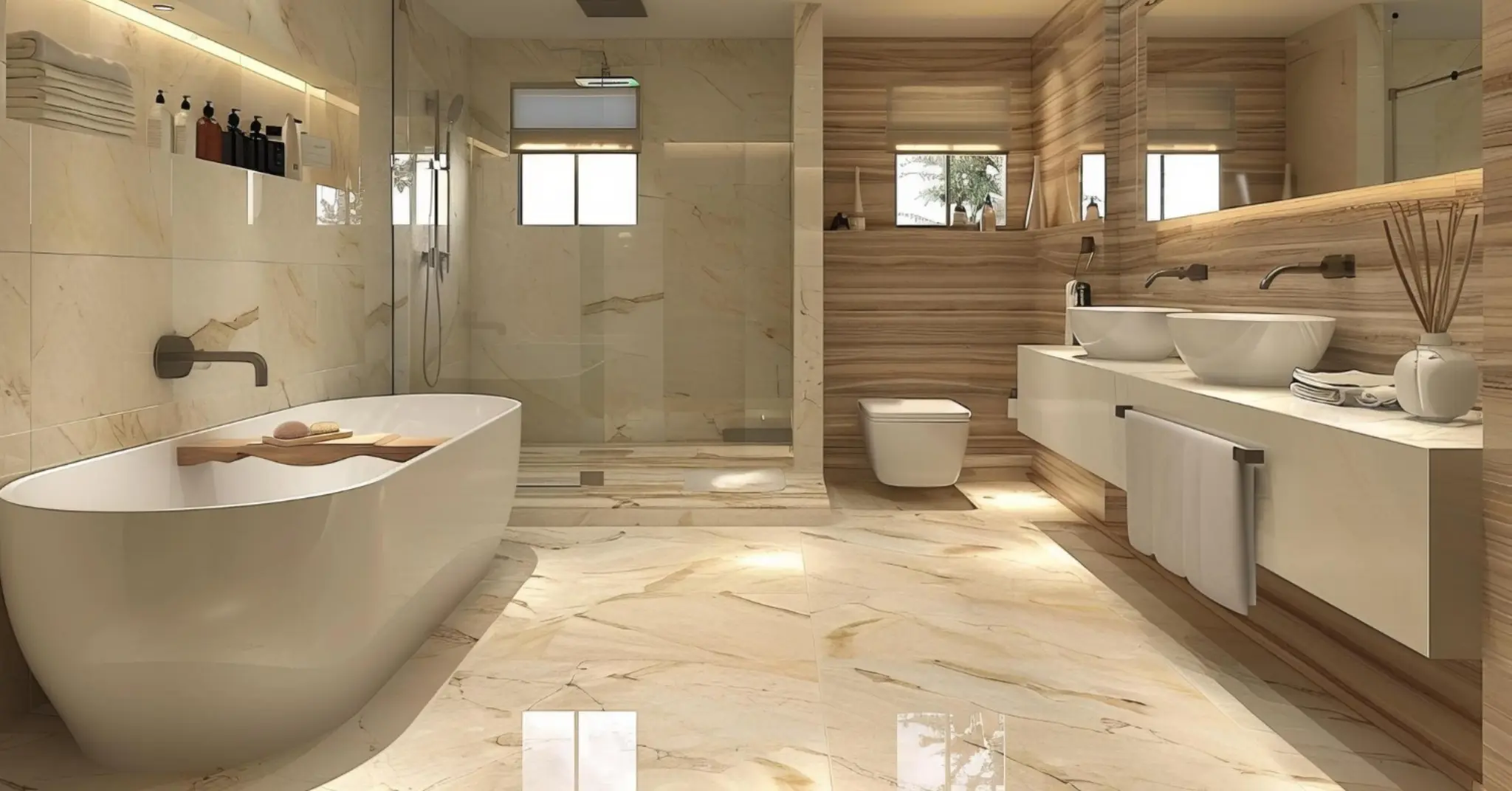
Bathroom material selection guide is one of the most critical yet overlooked aspects of interior design. Bathrooms are the most technically demanding spaces in any home. They deal with constant moisture, temperature changes, chemicals, and heavy daily use. Choosing the wrong materials can lead to long-term issues like seepage, tile failure, mould growth, and safety risks.
In fact, poor waterproofing and material selection are among the leading causes of bathroom damage, where moisture can penetrate tiles and weaken flooring systems over time . This makes it essential to approach bathroom materials with a performance-first mindset.
At Studio Mavi, widely regarded as one of the best interior design studios in Pune, bathroom design is treated as a technical system—where flooring, walls, grout, and waterproofing work together for durability, safety, and longevity.
Anti-Skid Flooring: Safety Meets Durability
Bathroom flooring is not just about design—it is about safety. Wet surfaces significantly increase the risk of slipping, especially for children and elderly users. This is why anti-skid tiles are non-negotiable.
Anti-skid tiles are engineered with textured surfaces that improve grip. These surfaces reduce slipperiness even when exposed to water and soap. Research and industry data show that slip-resistant tiles improve traction and reduce accident risks in wet areas .
From a durability standpoint, anti-skid tiles are:
- Highly resistant to wear and tear
- Designed for long-term water exposure
- Easy to maintain with matte finishes
also highlights that these tiles are water-resistant, sturdy, and long-lasting, making them ideal for bathrooms.
For best results:
- Choose tiles with R10–R12 slip ratings (industry standard for wet zones)
- Prefer matte or textured finishes over glossy
- Use smaller tiles in shower areas for better grip
Studio Mavi ensures flooring is selected based on safety standards, not just visual appeal.
Wall Cladding: Moisture Resistance + Maintenance
Bathroom walls face continuous exposure to water, steam, and cleaning chemicals. The wrong material can lead to staining, mould, and deterioration.
The most effective wall cladding options include:
- Porcelain tiles (low water absorption, high durability)
- Ceramic tiles (budget-friendly, easy maintenance)
- Large-format tiles (fewer joints, less grout maintenance)
Studies show that tiles with low water absorption perform better in wet environments, improving durability and resistance to temperature changes .
Large-format tiles are increasingly popular because:
- They reduce grout lines (less mould risk)
- Create a seamless, premium look
- Are easier to clean
Studio Mavi often recommends a mix of:
- Durable base tiles
- Feature wall cladding (stone, texture, or accent tiles)
This balances performance with aesthetics.
Grout Selection: The Hidden Hero of Durability
Grout is one of the most underestimated elements in bathroom design—but it directly affects durability, hygiene, and maintenance.
Poor grout selection leads to:
- Water seepage
- Mould growth
- Tile loosening
There are two primary types of grout used in bathrooms:
Cementitious Grout
- Affordable and widely used
- Suitable for general applications
- More porous → prone to stains over time
Epoxy Grout
- Non-porous and waterproof
- Highly resistant to stains and chemicals
- Extremely durable in wet environments
Epoxy grout is significantly more durable and resistant to mould and water penetration, making it ideal for bathrooms
- Epoxy grout = premium, low maintenance, long life
- Cement grout = budget, higher maintenance
Studio Mavi strongly recommends epoxy grout for:
- Shower areas
- High-use bathrooms
- Premium homes
Waterproofing: The Most Critical Layer
If there is one element that defines bathroom longevity, it is waterproofing.
Waterproofing is the invisible layer beneath tiles that prevents water from seeping into walls and floors. Without it, even the best tiles and grout will fail over time.
Industry research shows:
- Bathrooms are exposed to constant humidity and water pressure
- Water can seep through grout joints into substrates
- Improper systems lead to tile debonding and structural damage
Waterproofing typically includes:
- Cementitious coatings
- Acrylic or polyurethane membranes
- Multi-layer application systems
It is important to understand:
- Tile adhesive is not waterproofing
- Waterproofing must be done before tiling begins
Water-resistant adhesives help maintain bond strength in wet areas, but they must be used alongside a proper waterproofing system for long-term performance .
Studio Mavi treats waterproofing as a non-negotiable technical layer, ensuring:
- Correct material selection
- Proper curing time
- Compatibility with adhesives and tiles
Adhesives and Installation: The Missing Link
Even the best materials fail with poor installation. Adhesives play a crucial role in holding tiles securely in place.
Modern bathrooms use polymer-modified tile adhesives, which:
- Provide stronger bonding than traditional cement
- Resist moisture and thermal expansion
- Reduce tile loosening and cracking
Research indicates that polymer-modified adhesives significantly reduce failure rates in wet areas compared to traditional mortar .
Studio Mavi ensures:
- Correct adhesive grade (C2/S1 standard)
- Compatibility with tile type
- Proper curing before grouting
Durability Strategy: Thinking Beyond Aesthetics
To create a long-lasting bathroom, materials must work together as a system:
- Anti-skid tiles → safety + durability
- Low-porosity wall tiles → moisture resistance
- Epoxy grout → waterproof joints
- Waterproofing membrane → structural protection
- Polymer adhesive → long-term bonding
This integrated approach ensures:
- Reduced maintenance
- Higher lifespan (10–15+ years)
- Better hygiene and safety
Why Professional Material Planning Matters
Bathrooms are not forgiving spaces. Small mistakes—wrong grout, poor waterproofing, or low-quality tiles—can lead to expensive repairs later.
As the best interior design studio in Pune, Studio Mavi approaches bathrooms with a system-based design strategy. Every layer is planned with precision, ensuring performance, durability and visual consistency.
Final Thoughts
A bathroom is only as strong as its weakest material layer. While tiles and finishes define the look, performance depends on what lies beneath—grout, adhesives, and waterproofing.
By focusing on durability, safety, and proper material selection, homeowners can create bathrooms that not only look refined but also perform reliably for years.
The right bathroom material selection is not about choosing the most expensive option—it is about choosing the right system.
FAQs
Which flooring is best for bathrooms in India?
Anti-skid tiles with matte finish and high slip resistance (R10+) are the safest choice.
Is epoxy grout better than cement grout?
Yes, epoxy grout is waterproof, stain-resistant, and more durable.
Is waterproofing really necessary in bathrooms?
Absolutely. Without waterproofing, water seepage can damage walls and flooring.
Which tiles are best for bathroom walls?
Porcelain tiles are preferred due to low water absorption and high durability.
How long should bathroom materials last?
With proper selection and installation, bathroom materials can last 10–15 years or more.