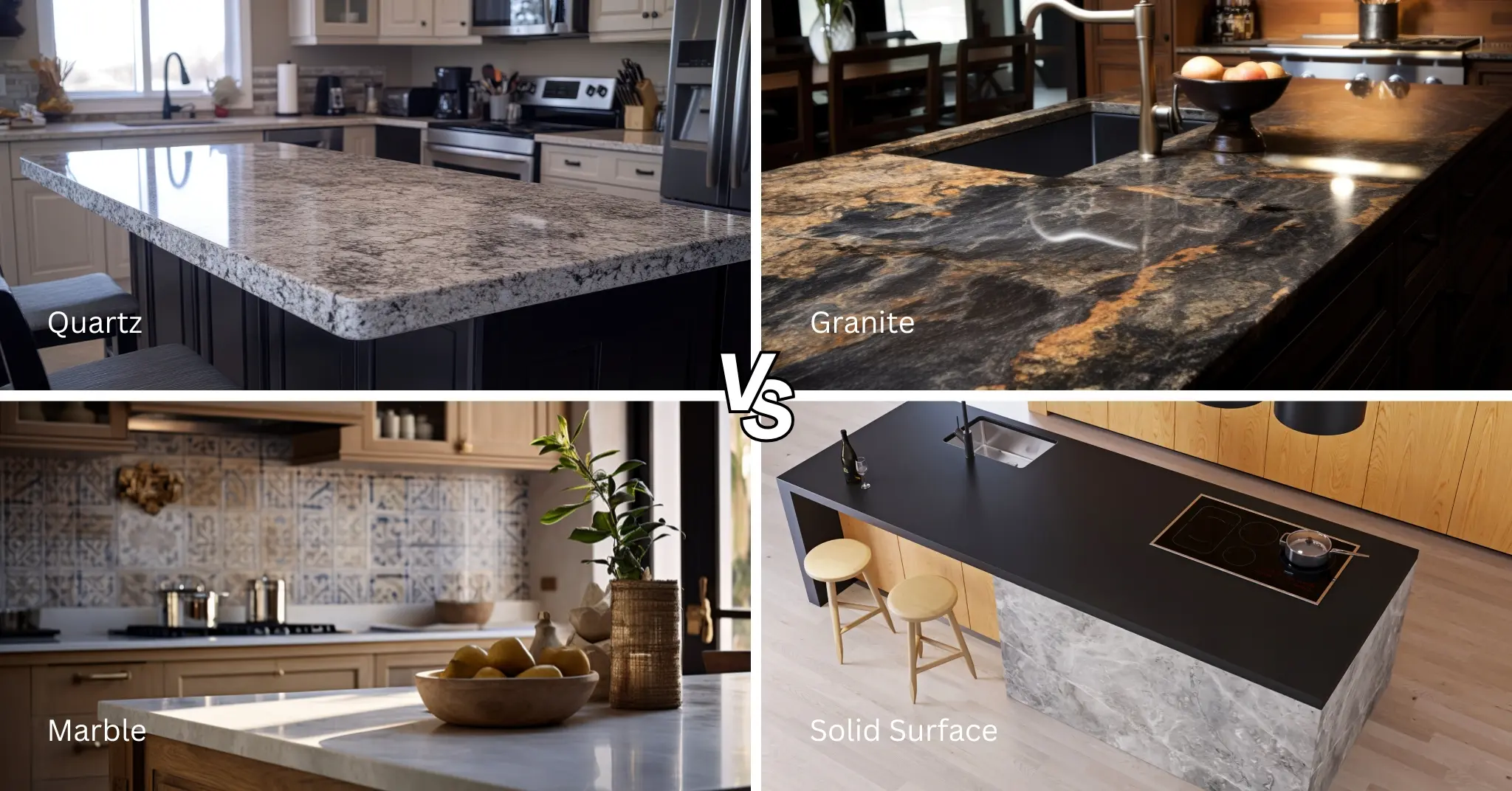
Best kitchen countertop material in India is a question most homeowners face while designing or renovating a kitchen. Countertops are among the most heavily used surfaces in any home. They must withstand heat, moisture, stains, and daily wear while still looking refined and cohesive with the rest of the interior. Choosing the right material is therefore a long-term decision that affects durability, maintenance, and overall kitchen usability.
In Indian kitchens, where cooking styles involve high heat, oil, spices, and frequent cleaning, countertops must balance performance with aesthetics. At Studio Mavi, regarded as one of the best interior design studios in Pune, countertop selection is approached as part of a broader material strategy, ensuring it complements both lifestyle and design intent.
This guide compares four of the most commonly used countertop materials in India: quartz, granite, marble, and solid surface.
Understanding What Makes a Good Countertop
A good countertop should be durable, easy to maintain, resistant to heat and stains, and visually compatible with the rest of the kitchen. It must also suit the way the household cooks and uses the space. Indian kitchens often require higher resistance to heat and oil compared to Western kitchens, making material choice especially important.
Countertop materials are typically chosen based on hardness, porosity, maintenance needs, and long-term performance. Concepts such as porosity and hardness are well documented in material science references and on Wikipedia, particularly under entries for stone, quartz, and marble.
Quartz Countertops
Quartz countertops are engineered surfaces made from crushed natural quartz combined with resins and pigments. Quartz is one of the hardest minerals on Earth, a fact noted in geological references and on Wikipedia. Because quartz countertops are manufactured, they offer consistency in colour and pattern.
Quartz is non-porous, making it resistant to stains and bacterial growth. This makes it an excellent choice for households seeking low-maintenance surfaces. It does not require sealing and is easy to clean with mild soap and water.
However, quartz is less heat resistant than granite. Direct placement of very hot utensils can damage the surface, so trivets are recommended. Quartz works particularly well in modern kitchens with controlled colour palettes and minimal maintenance requirements.
At Studio Mavi, quartz is often specified in contemporary homes where visual consistency and ease of care are priorities.
Granite Countertops
Granite is a natural igneous rock formed from cooled magma beneath the Earth’s surface. Each slab is unique in pattern and colour. Its geological formation and properties are described in detail under Granite on Wikipedia.
Granite is highly durable and heat resistant, making it suitable for heavy Indian cooking. Hot vessels can generally be placed directly on granite without causing damage. It is also scratch resistant and long lasting.
However, granite is porous and requires periodic sealing to prevent staining from oil or acidic substances. Maintenance is straightforward but must be done consistently to preserve its performance.
Granite remains one of the most widely used countertop materials in India due to its durability and affordability. Studio Mavi often uses granite in kitchens where performance and natural material character are key priorities.
Marble Countertops
Marble is a metamorphic rock known for its elegant veining and luxurious appearance. It has been used in architecture and interiors for centuries. The composition and properties of marble are detailed on Wikipedia under Marble.
While marble offers unmatched visual appeal, it is softer and more porous than granite or quartz. It can scratch, stain, and etch more easily, especially when exposed to acidic substances like lemon or vinegar. For this reason, marble is often used in areas where visual impact is more important than heavy-duty performance.
In Indian kitchens, marble is typically recommended for low-usage areas, baking counters, or spaces where aesthetics take precedence. Studio Mavi integrates marble selectively, ensuring homeowners understand its maintenance needs before choosing it.
Solid Surface Countertops
Solid surface materials are engineered using acrylic or polyester resins combined with minerals. Brands such as Corian are well known in this category. Solid surface countertops are non-porous, seamless, and repairable, making them practical for certain kitchen applications.
They are resistant to stains and easy to maintain, but they are less heat resistant than granite or quartz. Prolonged exposure to hot utensils can cause damage. However, scratches and minor damage can often be repaired, which is a significant advantage.
Solid surfaces work well in modern kitchens where seamless joints and integrated sinks are desired. Studio Mavi sometimes recommends solid surface countertops for utility areas or kitchens that prioritise a clean, uniform look.
Know more about us and our approach to material selection and interior detailing at Studio Mavi.
Cost Comparison
Granite generally offers the most affordable starting range among these materials, especially locally sourced varieties. Quartz sits in the mid-to-premium range depending on brand and finish. Marble can vary widely in cost depending on type and origin. Solid surface materials are typically mid-range but can increase in cost for premium brands.
The best approach is to consider long-term value rather than initial cost. A durable countertop that lasts decades often proves more economical than one requiring frequent repairs or replacement.
Maintenance and Longevity
Quartz and solid surface materials require the least maintenance due to their non-porous nature. Granite requires periodic sealing but offers excellent durability. Marble requires the most care and is best suited for homeowners willing to maintain it regularly.
Studio Mavi helps homeowners evaluate maintenance expectations early in the design process to ensure the chosen material aligns with their lifestyle.
Best Use Cases
Granite is ideal for heavy cooking kitchens where durability and heat resistance are essential. Quartz suits modern kitchens that prioritise hygiene and minimal maintenance. Marble works best for accent counters or visually prominent areas with lighter usage. Solid surface materials are effective for seamless, contemporary designs and utility zones.
Choosing the best kitchen countertop material in India ultimately depends on how the kitchen will be used, the desired aesthetic, and long-term maintenance preferences.
Final Thoughts
Selecting the right countertop is one of the most important decisions in kitchen design. Each material—quartz, granite, marble, and solid surface—offers distinct advantages and limitations. The best choice is one that balances durability, maintenance, cost, and visual harmony with the rest of the home.
As one of the best interior design studios in Pune, Studio Mavi approaches countertop selection with a holistic perspective. By considering cooking habits, spatial planning, and long-term usability, the right material can enhance both the performance and beauty of the kitchen for years to come.
FAQs
Which countertop is best for Indian kitchens?
Granite and quartz are most practical for Indian cooking due to durability and stain resistance.
Is quartz better than granite?
Quartz needs less maintenance, but granite handles heat better.
Does marble stain easily?
Yes, marble is porous and can stain or etch without proper care.
What is the most low-maintenance countertop?
Quartz and solid surface countertops require the least upkeep.
Which countertop lasts the longest?
Granite and quartz can last decades when maintained properly.