In the evolving world of home design, the debate between open floor plans and zoned living continues to gain traction. As we move deeper into 2025, homeowner preferences are shifting — influenced by lifestyle changes, remote work trends, wellness needs, and space efficiency. While open layouts once dominated residential design with their free-flowing aesthetics, the resurgence of zoned living is bringing structure and privacy back into focus.
So, which one do homeowners truly prefer in 2025 — open floor plans or zoned layouts? Let’s break it down.
What Is an Open Floor Plan?
An open floor plan eliminates most interior walls between the kitchen, living, and dining spaces, creating a single, large open space. It fosters a sense of spaciousness, encourages interaction, and allows more natural light to flow throughout the home.
Advantages of open floor plans in 2025:
- Better natural lighting: Fewer walls mean more sunlight can pass through.
- Ideal for entertaining: Great for hosting parties or family gatherings.
- Visually expansive: Perfect for smaller homes or apartments.
- Fluid movement: Promotes free movement across different zones.
What Is Zoned Living?
Zoned living refers to homes designed with distinct, clearly defined areas for different functions — such as a separate kitchen, a formal dining room, a reading nook, or a dedicated home office. The trend is a return to structured spatial planning, prioritizing function, privacy, and peace.
Why zoned living is trending in 2025:
- Noise control: Useful in larger families or when working from home.
- Better privacy: Great for households with different routines or preferences.
- Improved temperature and lighting control: Separate areas can be individually optimized.
- Function-focused design: Each room serves a unique purpose.
What Homeowners Are Preferring in 2025: A Shift in Mindset
In the 2010s, open plans were considered the gold standard — a sign of modernity and openness. But post-2020, the global pandemic redefined how people used their homes. Kitchens became offices, living rooms became classrooms, and suddenly, open spaces started feeling chaotic.
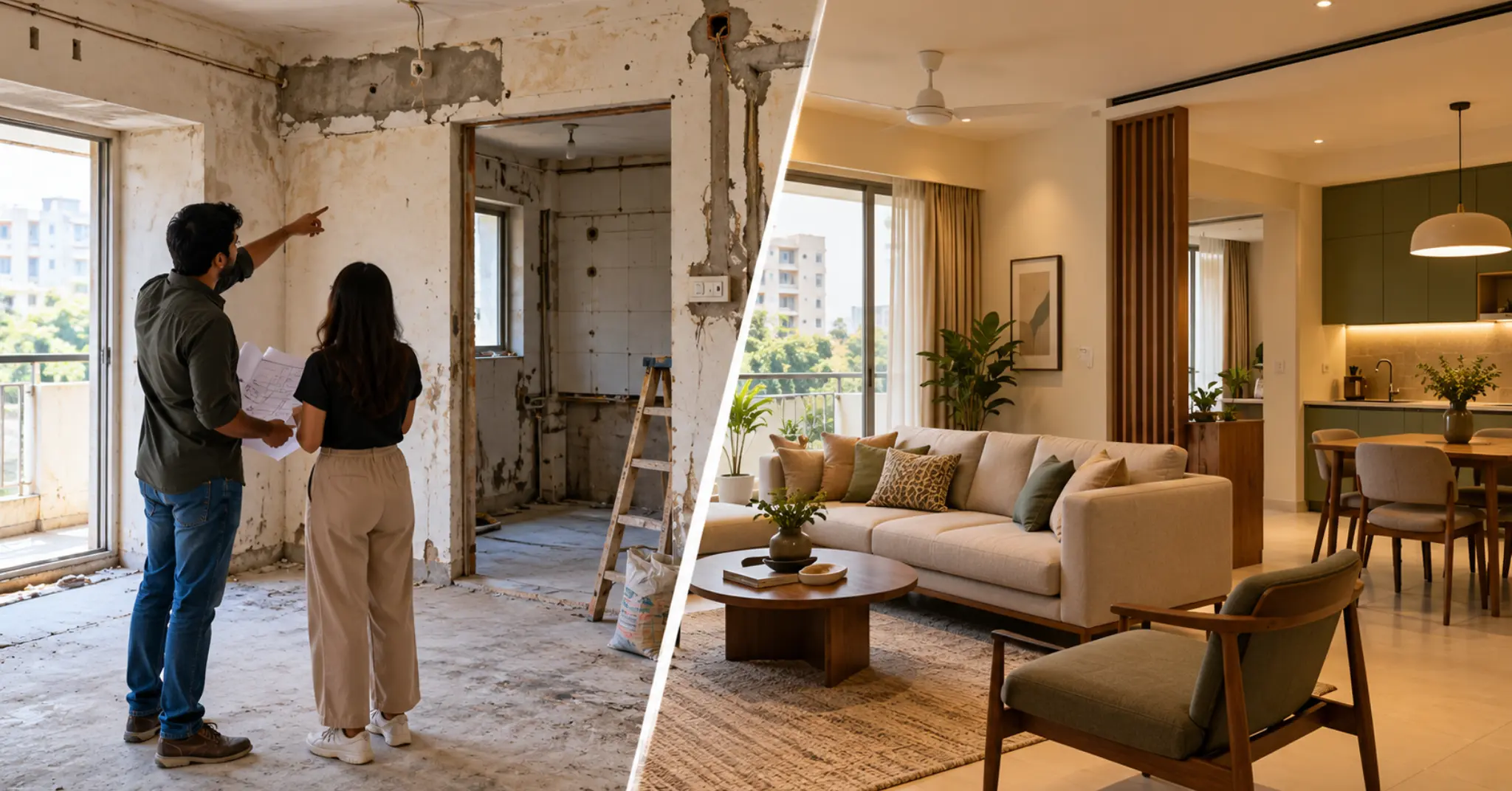
As of 2025, a hybrid approach is gaining popularity. Homeowners want flexibility, but they also need designated, calm spaces. This shift has given rise to semi-open layouts or soft zoning techniques, where partial walls, glass dividers, sliding doors, or architectural elements like changes in ceiling height help maintain openness while introducing separation.
Data Speaks: What Surveys Say
According to recent homebuyer surveys and design trend reports from architectural firms:
- 68% of homeowners in 2025 prefer partially zoned layouts that offer both connectivity and structure.
- Only 21% still prefer a completely open layout.
- Remote workers (especially in urban India and metro cities globally) are 3x more likely to favor zoned living.
- Families with children or elders find zoning especially beneficial for managing activities, noise, and comfort.
Open vs. Zoned: Use Cases Based on Lifestyle
1. For Working Professionals: Zoned Wins
With remote and hybrid work models becoming the norm, homeowners now demand distraction-free home offices. Open floor plans, while airy, don’t offer the isolation needed for video calls or focused work.
2. For Entertainers: Open Still Works
If you frequently host dinner parties or casual gatherings, open plans remain attractive. They allow you to cook while interacting with guests, making the home feel more social and inclusive.
3. For Growing Families: Zoned Is Preferred
Families with kids need structure. Whether it’s a quiet room for homework or a play zone, defined areas reduce conflicts and create calm. Zoned layouts allow better organization and use of space.
4. For Compact Homes: Open Works Better
In smaller homes or studio apartments, open layouts reduce visual clutter and make the space feel larger and more breathable.
5. For Wellness-Focused Living: Zoned Takes the Lead
In 2025, more homeowners are seeking wellness-enhancing spaces — reading corners, meditation nooks, yoga rooms, etc. Zoned living enables such intentional space-making.
The Role of Design Innovation in 2025
Thanks to smarter design and modular furniture, the binary between open and zoned living is blurring. Designers are introducing movable partitions, folding screens, ceiling-mounted curtains, and even smart glass dividers that can become opaque or transparent at the touch of a button. These innovations offer flexibility without permanent architectural changes.
Some examples:
- A sliding barn door that can close off the kitchen during working hours.
- An L-shaped bookshelf that subtly separates a living room from a dining area.
- Acoustic panel dividers that double as decor and noise buffers.
Sustainability Angle: Zoned Living Gets an Edge
In sustainable home design, zoned layouts are more energy-efficient. Homeowners can control lighting, heating, and cooling for individual rooms — minimizing energy use. In open plans, heating or cooling one large space consumes more power, increasing the carbon footprint.
Maximising Small Spaces: The Smart Way
In 2025, efficient space utilization is a top priority — especially in urban apartments and compact homes. Open floor plans work well to visually expand tight areas, but zoned living can also shine in small spaces when designed intelligently. Think multifunctional furniture, vertical storage, and movable partitions that allow spaces to shift roles throughout the day — from home office to dining nook to lounge. Designers are increasingly using light colors, mirrors, and built-in storage to make small homes feel bigger without sacrificing privacy. With thoughtful zoning and smart layout planning, even a 500 sq. ft. home can feel roomy, organized, and purposeful.
So, Which Is Better?
There’s no one-size-fits-all answer. The better option depends on:
- Your lifestyle needs
- Home size and layout
- Work-from-home requirements
- Family composition
- Entertainment preferences
However, the 2025 verdict leans towards zoned living — or at least semi-zoned formats that balance openness with functionality. It’s no longer just about aesthetic flow; it’s about how a space supports everyday life.
Conclusion: A Future of Flexible Zoning
Home design in 2025 is no longer about extremes. The conversation isn’t “either-or,” but rather “how much of both.” Smart homeowners and interior designers are embracing flexible zoning — creating homes that can evolve throughout the day and adapt to changing needs.
Whether you prefer wide-open elegance or calm, compartmentalized living, the key lies in intentional design. As this trend continues to unfold, one thing is clear: homes are being designed to support how people actually live — not just how they look.