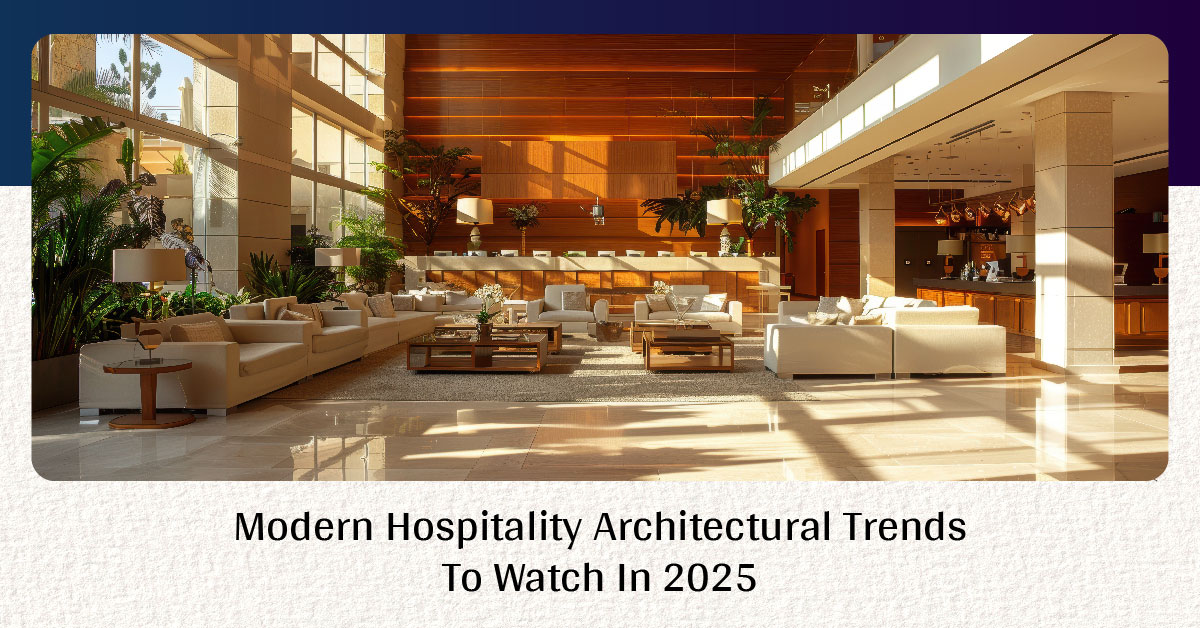
The hospitality industry is undergoing a transformative shift, and architecture is at the heart of this evolution. In 2025, hotel and resort designs are no longer just about aesthetics and comfort; they reflect deeper narratives of sustainability, personalization, and experiential living.
From biophilic designs to AI-driven smart buildings, the hospitality sector is embracing architectural innovations that resonate with the modern traveler’s values and expectations.
This blog delves into the top architectural trends that are shaping the future of hospitality in 2025, offering insights for designers, developers, and guests alike.
1. Biophilic Design: Bringing Nature Indoors
Biophilic design continues to dominate in 2025, blending the built environment with natural elements to promote well-being and relaxation. Hotels are increasingly integrating green walls, indoor gardens, water features, and natural materials like wood and stone.
Benefits of biophilic design include:
- Improved mental health and reduced stress levels for guests
- Enhanced air quality through indoor plant systems
- Increased guest satisfaction and longer stays
Architectural firms are collaborating with landscape designers to create seamless transitions between indoor and outdoor spaces, giving guests a sense of harmony with nature.
2. Adaptive Reuse and Sustainable Architecture
Sustainability is no longer optional- it’s a necessity. In 2025, adaptive reuse of existing buildings is gaining traction as an eco-friendly alternative to new constructions.
Old warehouses, industrial buildings, and historical landmarks are being transformed into boutique hotels with minimal environmental impact.
Key elements include:
- Use of reclaimed materials
- Energy-efficient systems (solar panels, geothermal heating, etc.)
- LEED and WELL certification standards
This trend not only preserves cultural heritage but also aligns with the eco-conscious values of Gen Z and Millennial travelers.
3. Smart Technology Integration
Hospitality architecture in 2025 is deeply intertwined with technology. Smart hotels feature AI-powered systems that personalize guest experiences through data-driven design.
From automated lighting and temperature controls to voice-activated room service, architecture is evolving to support tech-forward living.
Examples include:
- Contactless check-ins with facial recognition
- IoT-enabled guest rooms
- Smart mirrors and digital concierges
This seamless integration enhances convenience and elevates the overall guest experience, making it a must-have in modern hospitality design.
4. Modular and Prefabricated Construction
Speed and efficiency are critical in today’s fast-paced industry. Modular and prefabricated construction techniques are revolutionizing how hotels are built.
In 2025, many hospitality brands are opting for off-site construction methods to reduce timelines and maintain consistent quality.
Advantages:
- Faster project delivery
- Reduced construction waste
- Flexibility in design and scalability
These structures can be customized to reflect local aesthetics, ensuring they remain unique despite standardized production.
5. Hyper-Local Design Aesthetics
Modern travelers crave authentic experiences, and architecture plays a crucial role in storytelling.
In 2025, hospitality spaces are embracing hyper-local design elements that reflect the cultural, historical, and environmental context of their location.
Key features:
- Locally sourced materials
- Art and decor by regional artists
- Architecture that mimics native landscapes or historical structures
This approach fosters a sense of place and deepens the emotional connection between guests and their surroundings.
6. Wellness-Focused Architecture
Wellness is a core component of hospitality in 2025. Architectural designs are prioritizing health and rejuvenation through thoughtful spatial planning, lighting, and materials.
Wellness architecture includes:
- Natural ventilation and circadian lighting systems
- In-room fitness zones
- Meditation gardens and wellness retreats
These elements not only appeal to health-conscious guests but also enhance the overall value proposition of the property.
7. Flexible and Multi-Functional Spaces
Post-pandemic shifts have reshaped how spaces are used. In 2025, hospitality architecture emphasizes adaptability.
Hotels are creating multi-purpose zones that can transition from co-working spaces by day to lounges or event venues by night.
Popular features:
- Movable partitions
- Convertible furniture
- Hybrid indoor-outdoor spaces
This flexibility meets the diverse needs of modern travelers, from digital nomads to leisure seekers.
8. Experiential and Immersive Environments
Guests in 2025 are looking for more than a place to stay, they want memorable experiences. Architecture is responding with immersive design strategies that engage all the senses.
Design elements:
- Thematic suites and interactive art installations
- Augmented reality (AR) and virtual reality (VR) integrations
- Personalized lighting and soundscapes
These spaces not only entertain but also foster emotional engagement, making them Instagram-worthy and marketable.
Final Thoughts
The architectural landscape of hospitality in 2025 is dynamic, guest-centric, and driven by purpose. Sustainability, technology, wellness, and cultural authenticity are no longer trends- they are the pillars of modern design.
By embracing these architectural innovations, hospitality brands can create spaces that resonate with evolving guest expectations while contributing positively to the environment and local communities.
Whether you’re designing a luxury resort or a boutique city hotel, staying ahead of these trends ensures relevance, impact, and enduring guest loyalty in a rapidly changing world.
FAQ’s
1. What is biophilic design in hospitality architecture?
Biophilic design integrates natural elements such as plants, water features, and natural light into indoor spaces to enhance guest well-being and create a calming atmosphere.
2. How is sustainability being addressed in hotel architecture in 2025?
Architects are using adaptive reuse strategies, energy-efficient systems, and sustainable materials to reduce environmental impact and align with eco-conscious guest expectations.
3. What smart technologies are being used in modern hotels?
Smart hotels feature AI-driven automation for lighting and climate control, voice-command systems, contactless check-ins, and IoT-connected devices for personalized guest experiences.
4. Why are modular constructions popular in the hospitality sector?
Modular construction offers faster build times, cost efficiency, reduced waste, and flexibility in design, making it ideal for rapid hospitality developments.
5. How does architecture contribute to the guest experience?
Through immersive design, local aesthetics, and wellness-focused spaces, architecture creates memorable, emotionally engaging environments that enhance the overall guest journey.