Discover the latest ceiling design trends that actually work for modern Indian homes, where practicality matters just as much as aesthetics. Ceilings are no longer treated as flat, ignored surfaces. They are now an active part of interior design—shaping how a space feels, how light moves, and how proportion is perceived.
In cities like Pune, where homes range from compact apartments to spacious villas, ceiling design must balance visual interest with comfort, maintenance, and long-term usability. At Studio Mavi, regarded as one of the best interior design studios in Pune, ceilings are designed with intent—never decorative for the sake of trend, but purposeful and integrated into the overall interior language.
Why Ceiling Design Matters More Than Ever
Ceilings influence how spacious or intimate a room feels. A well-designed ceiling can visually increase height, define zones, and add architectural character without occupying floor area.
Earlier, false ceilings were used mainly to conceal wiring or lighting. Today, ceiling design plays a central role in shaping the mood of a room. When handled professionally, ceilings enhance both aesthetics and function, especially in living rooms, bedrooms, and open-plan homes.
Studio Mavi’s residential interiors reflect this shift, where ceilings are planned alongside layouts, lighting, and material selection rather than as an afterthought.
Clean, Minimal False Ceilings
One of the most effective ceiling trends is restraint. Simple false ceilings with clean lines, minimal drops, and subtle detailing work best for Indian homes.
Instead of heavy layering or complex shapes, contemporary ceilings focus on slim profiles that accommodate lighting while keeping the room visually light. This approach is especially useful in apartments with standard ceiling heights, where excessive design can make spaces feel cramped.
Studio Mavi frequently uses minimal ceiling treatments to maintain openness while still providing depth and structure.
Layered Lighting as a Ceiling Feature
Lighting is now inseparable from ceiling design. The latest ceiling trends prioritise layered lighting—ambient lighting for overall brightness, task lighting for functionality, and accent lighting for mood.
Cove lighting, recessed fixtures, and concealed LED strips are used to highlight architectural elements rather than dominate the ceiling. Warm lighting tones help create comfort, while adjustable lighting adds flexibility for different times of day.
At Studio Mavi, lighting is planned early in the design process to ensure the ceiling supports both visual comfort and daily use.
Wooden Ceiling Accents
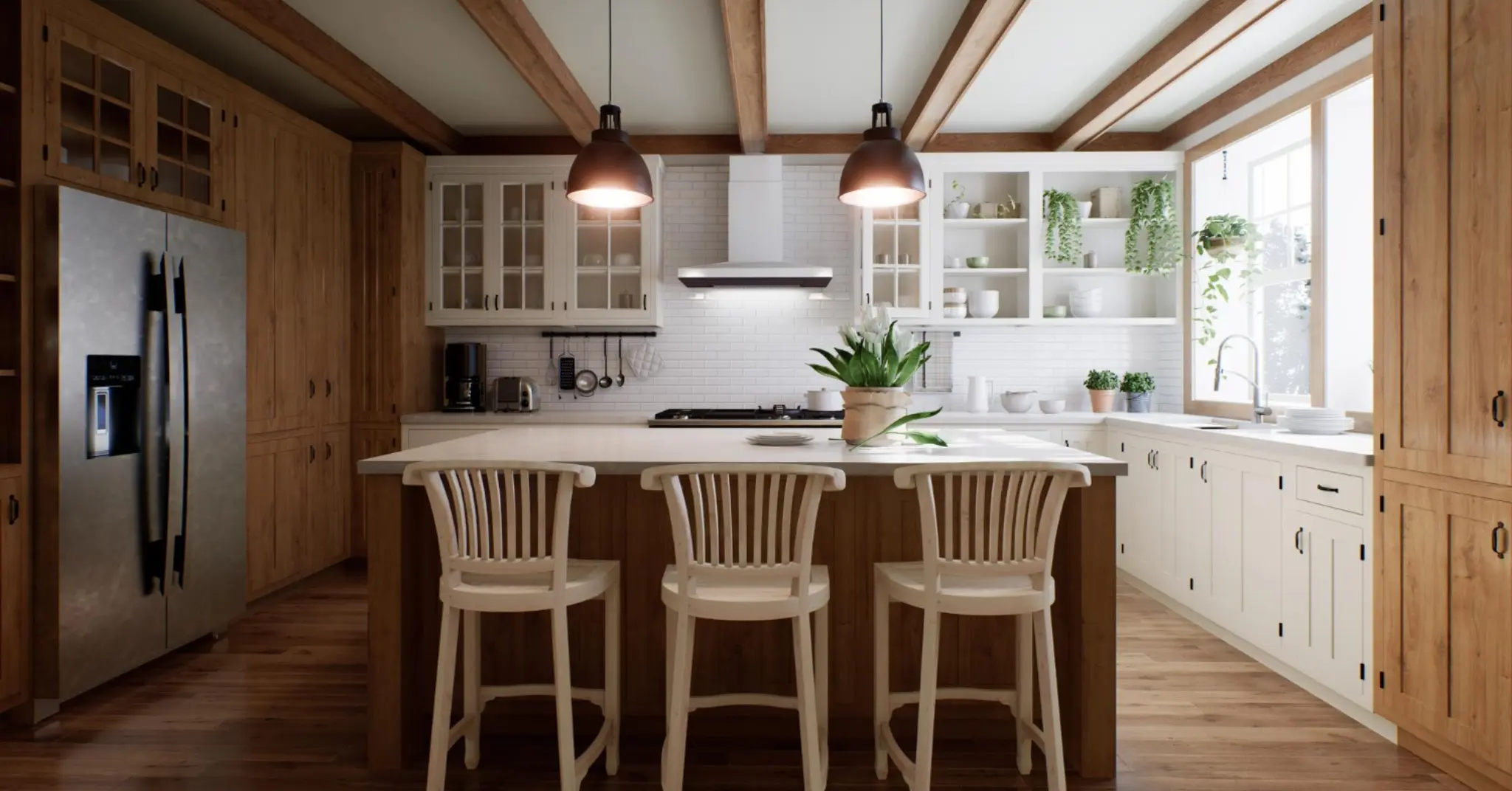
Wood is increasingly being introduced into ceiling design, but in a controlled and selective way. Wooden slats, panels, or beams add warmth and texture without overwhelming the space.
In Indian homes, wooden ceiling accents are often used in living rooms, dining areas, or master bedrooms to create visual distinction. When balanced with neutral walls and simple furniture, wood ceilings feel elegant rather than heavy.
Studio Mavi integrates wooden ceiling elements carefully, ensuring they complement the rest of the interior palette and do not reduce perceived height.
Statement Ceilings for Feature Spaces
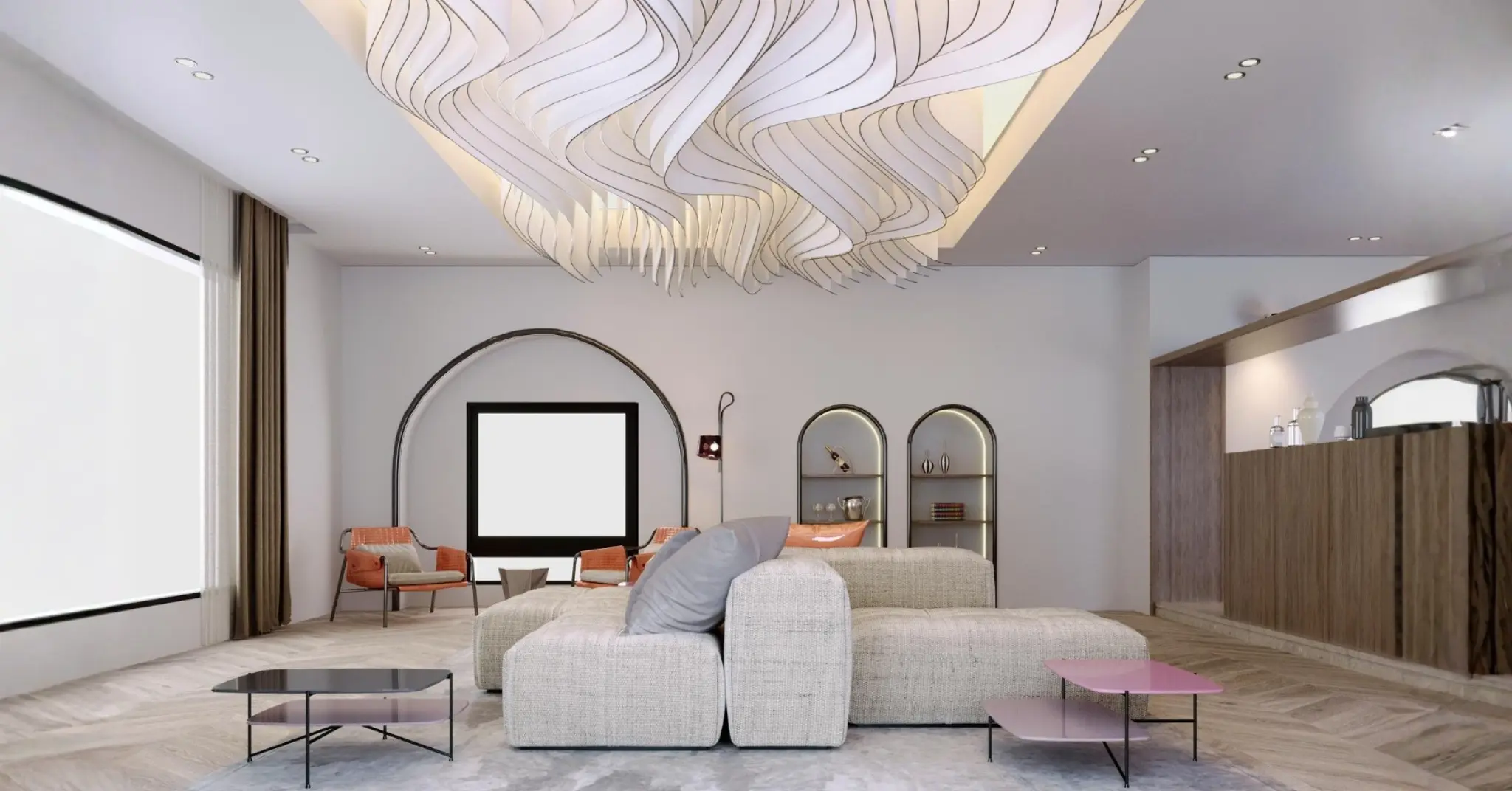
While minimal ceilings dominate, statement ceilings still have their place. Dining rooms, entry foyers, and formal living spaces can benefit from a more expressive ceiling design.
Textured finishes, subtle colour changes, or geometric patterns add character when used in moderation. The key is ensuring that statement ceilings remain timeless rather than trend-driven.
Professional interior studios assess where a statement ceiling will enhance the experience of a space rather than compete with it.
Colour on Ceilings
Ceilings are no longer restricted to white. Soft neutrals, muted pastels, and warm off-whites are increasingly used to add depth and cohesion.
In bedrooms and intimate spaces, slightly darker ceiling tones create a cocooning effect. In living areas, subtle colour variation helps define zones without adding partitions.
Studio Mavi’s design philosophy treats ceiling colour as part of the overall spatial composition, ensuring harmony across walls, floors, and furniture.
Textured Ceiling Finishes
Texture is becoming an important ceiling design element. Micro-textures, plaster finishes, and subtle grooves add depth without visual clutter.
Textured ceilings work particularly well in homes with simple furniture and neutral palettes, where they provide interest without distraction. These finishes also help diffuse light, creating softer illumination.
Studio Mavi often uses texture to balance smooth surfaces elsewhere in the home, creating a layered and tactile interior experience.
Integrated Ceiling and Furniture Design
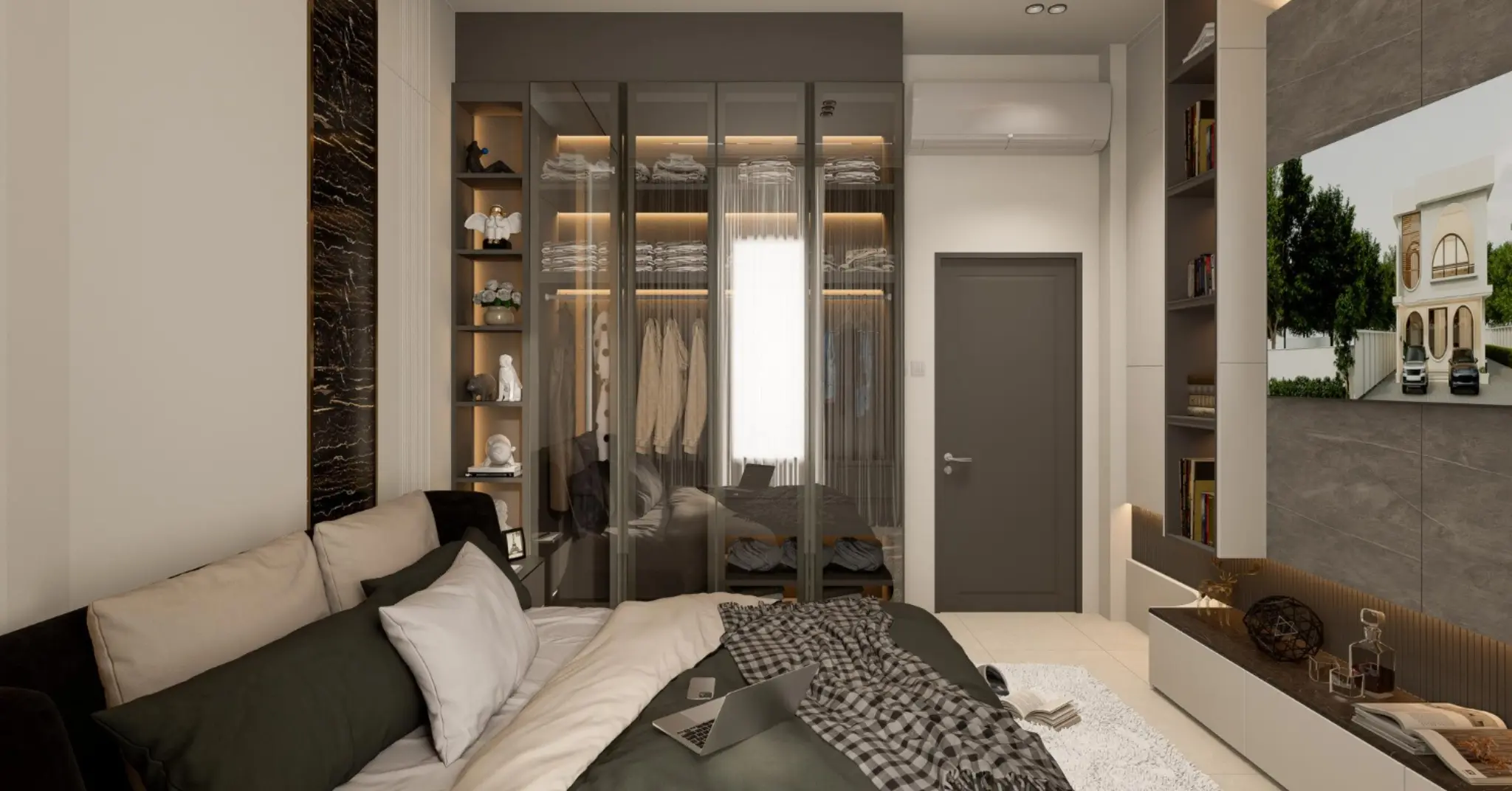
Modern ceiling trends focus on integration rather than isolation. Ceilings are designed in coordination with wardrobes, wall panelling, and storage units to create visual continuity.
For example, a ceiling drop may align with a wardrobe height, or lighting may extend into a panelled wall. This integrated approach makes interiors feel cohesive and well-resolved.
Studio Mavi’s holistic design process ensures ceilings support the spatial flow rather than exist as separate design elements.
Ceilings in Compact Homes
In smaller homes, ceiling design must be especially thoughtful. Overly decorative ceilings can reduce perceived height and make rooms feel enclosed.
Simple drops, concealed lighting, and minimal detailing work best for compact apartments. In many cases, retaining a higher ceiling with selective lighting can be more effective than adding a full false ceiling.
This sensitivity to scale and proportion is a defining aspect of Studio Mavi’s interior work.
Practical Considerations That Make Ceiling Designs Work
A ceiling design must be easy to maintain, durable, and compatible with services such as air conditioning and ventilation. Poorly planned ceilings can create long-term issues with access and repairs.
The latest ceiling trends prioritise accessibility and longevity. Detailing is kept clean, materials are chosen carefully, and service points remain accessible without compromising aesthetics.
As the best interior design studio in Pune, Studio Mavi ensures ceiling designs are not only visually appealing but also practical for everyday living.
Final Thoughts
Ceiling design trends today are not about excess or decoration. They are about creating spaces that feel comfortable, balanced, and thoughtfully designed. The most successful ceilings are those that quietly enhance the room—supporting light, proportion, and mood without demanding attention.
When planned with intention, ceiling designs add architectural value and elevate everyday living. Studios like Studio Mavi demonstrate that ceilings, when designed as part of a holistic interior strategy, can transform homes into refined, functional, and enduring spaces.
For homeowners seeking ceiling designs that actually work, the key lies in restraint, integration, and professional planning rather than chasing trends alone.
FAQs
Do false ceilings reduce room height significantly?
When designed correctly, false ceilings do not noticeably reduce room height. Minimal drops and clean profiles can actually improve proportions while accommodating lighting and services.
Which ceiling design works best for Indian apartments?
Simple false ceilings with concealed lighting work best for Indian apartments. They balance aesthetics, maintenance, and comfort without making spaces feel smaller.
Are wooden ceilings suitable for Indian climates?
Yes, when used selectively and treated properly, wooden ceiling accents work well in Indian homes. They are best used as highlights rather than full ceiling coverage.
Is it necessary to have a false ceiling in every room?
No. Not every room needs a false ceiling. In some spaces, retaining the original ceiling height with thoughtful lighting can be more effective.
How do I maintain a designed ceiling over time?
Regular dusting and occasional cleaning are usually sufficient. Choosing durable materials and accessible service points ensures long-term ease of maintenance.