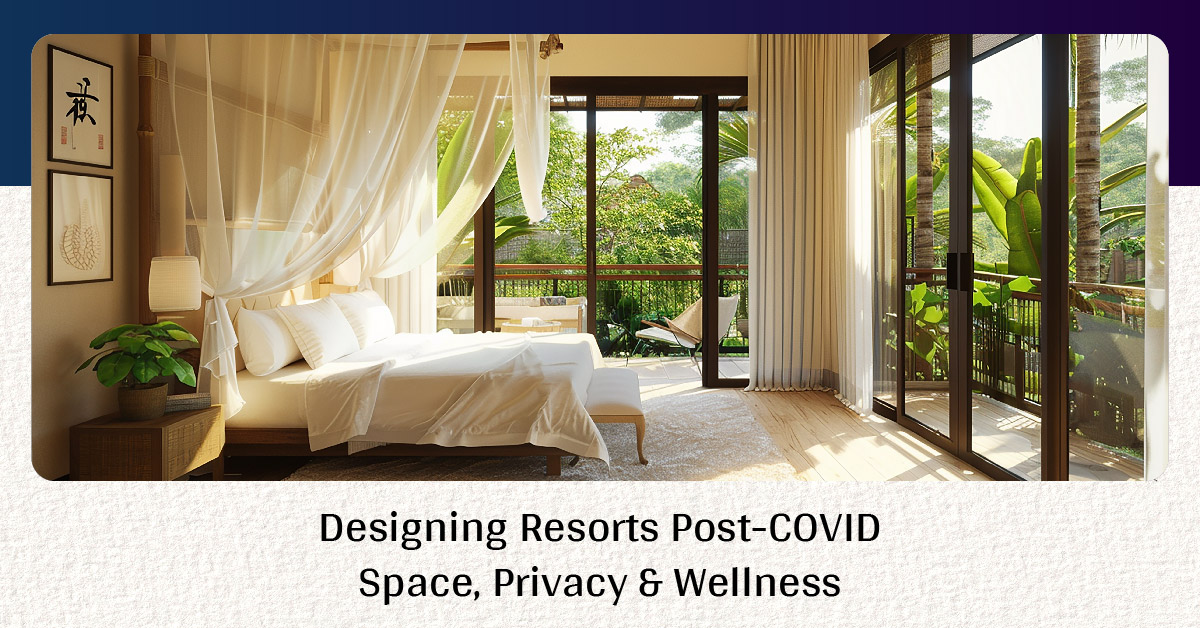
The COVID-19 pandemic reshaped the way we travel—and how we experience space. In the aftermath, the hospitality industry, especially resorts and leisure destinations, has had to reimagine itself. Travelers today seek more than just a scenic escape; they want safety, serenity, and wellness integrated into their vacation.
Designing resorts post-COVID requires a deep understanding of shifting guest expectations. Architecture and interior design now play a central role in not only ensuring safety and hygiene, but also creating meaningful, restorative experiences rooted in space, privacy, and wellbeing.
In this blog, we explore the key design strategies for post-pandemic resort architecture and why these trends are here to stay.
1. Space is the New Luxury
Post-COVID, space planning has become a top priority. Guests are more conscious about crowding and shared facilities. Open spaces now define luxury—not only in private rooms but across the entire resort layout.
Key Trends:
- Low-density design: Fewer rooms per acre, more breathing room between cottages or villas.
- Wide corridors and pathways that allow comfortable movement.
- Contactless transitions: From digital check-ins to automated doors and elevators.
- Private balconies, decks, or plunge pools attached to each unit.
Spaciousness doesn’t just address health concerns—it creates a deeper connection with nature, enhancing the overall experience.
2. Privacy by Design
Privacy has become a premium offering. Guests no longer want shared spas, packed lounges, or buffet-style dining. The post-COVID resort guest is looking for personal space without social compromise.
Design Responses:
- Standalone villas or pods instead of connected hotel blocks.
- Soundproofing and layered zoning to minimize noise and interruptions.
- Private dining areas within rooms or secluded outdoor spots.
- Non-linear layouts that prevent crowd bottlenecks.
By creating environments where guests feel shielded—yet still immersed—resorts can elevate trust and comfort.
3. Wellness as a Core Design Principle
Wellness has shifted from a spa service to an architectural principle. Today’s resort guests are looking for holistic healing—from clean air and natural light to sleep-enhancing spaces and restorative landscapes.
Architectural Approaches:
- Biophilic design : Maximizing natural materials, greenery, and indoor-outdoor fluidity.
- Orientation-based planning: Ensuring sunlight and airflow in every room.
- Low-toxicity interiors: Using low-VOC paints, breathable fabrics, and natural finishes.
- Integrated wellness spaces: Yoga decks, meditation pods, and walking trails that are part of the architecture.
According to a Global Wellness Institute report (2023), the wellness tourism market is expected to reach $1.4 trillion by 2027, with design being a key differentiator.
4. Touchless Technology and Smart Design
Design post-COVID is no longer just aesthetic—it’s interactive and hygienic by default. Smart technologies have allowed resorts to reduce touchpoints while increasing convenience.
Smart Solutions:
- Motion-sensor lighting and climate control.
- Voice-activated assistants or apps to manage services, doors, and entertainment.
- QR-based menus and virtual concierge systems.
- Automated sanitization protocols in common areas.
These tech-driven upgrades improve both guest safety and operational efficiency, making them a long-term investment rather than a temporary fix.
5. Outdoor Living Spaces: From Amenity to Essential
Outdoor spaces were once an afterthought in resort planning. Post-COVID, they have become central to guest wellbeing.
Design Opportunities:
- Garden courtyards and open-air lobbies
- Infinity pools with socially distanced cabanas
- Outdoor treatment rooms for massages and therapies
- Alfresco dining with shade zoning
Outdoor living offers twofold benefits—natural disinfection from sunlight and psychological comfort from open air.
6. Flexible, Multi-Use Spaces
The pandemic taught us the value of flexibility. Resorts now need to design for adaptability—spaces that can shift with the season, occupancy, or health advisories.
Examples:
- Modular rooms that can convert from single to family use.
- Hybrid business-retreat facilities for workcations.
- Pop-up wellness or dining zones based on need or distancing.
- Event areas with mobile partitions for quick reconfiguration.
This adaptability gives resorts a future-ready edge, especially in a world where travel norms can change rapidly.
7. Eco-Conscious Construction
COVID accelerated the demand for environmentally responsible travel. Guests now care about how the resort was built, not just how it looks.
Sustainable Design Choices:
- Use of local materials and crafts.
- Rainwater harvesting, greywater recycling, and solar energy integration.
- Minimal excavation and site-sensitive construction methods.
- Green roofs and vertical gardens for cooling and aesthetics.
Sustainability and wellness go hand in hand, creating resorts that feel natural, ethical, and rooted in place.
Final Thoughts
Designing resorts in a post-COVID world is not about temporary fixes—it’s about building with resilience, empathy, and long-term relevance. Travelers now seek experiences that are safe, spacious, and soul-nourishing.
At Studio Mavi, we approach resort design as a blend of functionality and feeling—curating spaces that support wellness, privacy, and sustainability without compromising luxury. Whether it’s a boutique jungle retreat or a coastal escape, we create environments that invite peace and inspire connection.