When embarking on a commercial space project—whether it’s a retail store, corporate office, café, or co-working hub—one of the most common questions people face is: Should I begin with the architect or the interior designer? While the two disciplines work hand in hand, they serve different purposes, timelines, and design functions.
Understanding the differences between commercial architecture and interior design, and how they impact your project planning, can save time, money, and stress. This blog breaks down their roles, scopes, and sequencing to help budding interior designers, architects, and business owners understand where to start and how to make the right decisions for their commercial projects.
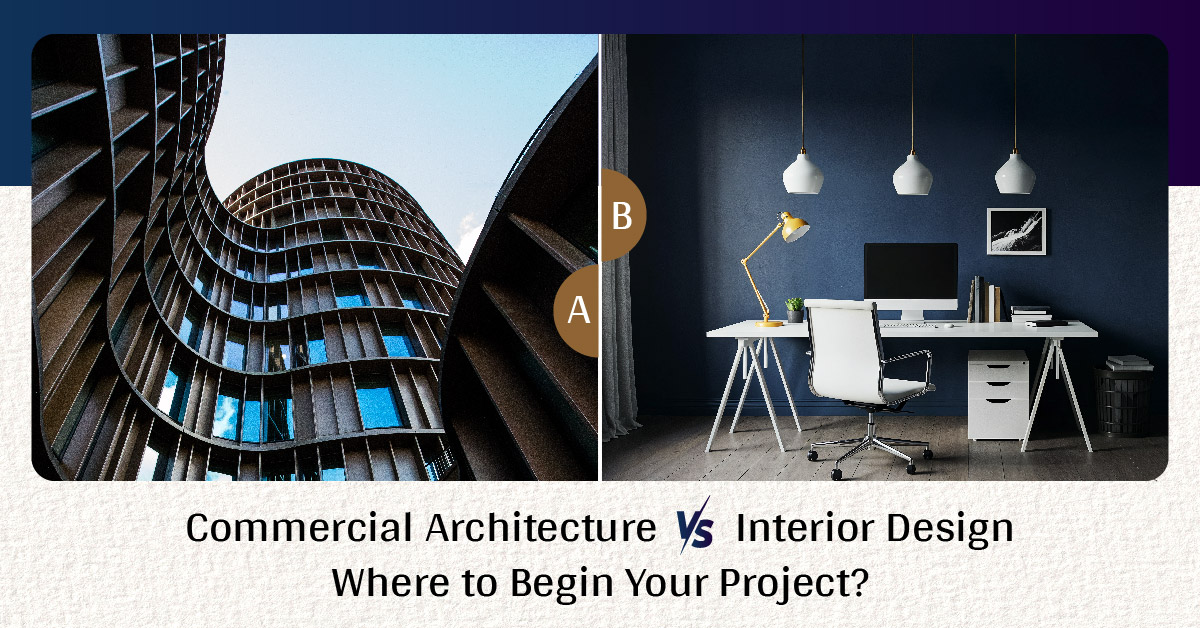
The Core Difference: Structure vs. Space Experience
At the heart of the discussion lies the difference in scale and intent.
- Commercial architecture focuses on the building’s structural integrity, spatial planning, and how it relates to the environment, by-laws, and future scalability.
- Interior design focuses on the aesthetics, function, and emotional feel of the internal environment—the experience of those who use the space.
While an architect designs the “skeleton,” an interior designer brings it to life with details, lighting, colors, furniture, and materials that align with the brand identity and usage.
Who Comes First: Architect or Interior Designer?
1. If the Building is Yet to Be Constructed: Start with Architecture
If you are constructing a commercial space from scratch—such as a new office building or restaurant—architecture comes first. Your architect:
- Determines the building layout, elevation, and structural system.
- Works on zoning regulations, fire safety codes, and building permissions.
- Plans for utilities, ventilation, lighting, and movement flow.
In this phase, interior designers can still collaborate to ensure that interior layouts are ergonomic, brand-aligned, and adaptable.
According to a report by McKinsey (2023), nearly 70% of commercial spaces built without early collaboration between architects and interior designers see scope creep or delays due to revisions in internal layout.
2. If You Have an Existing Shell: Begin with Interior Design
In cases where a space is already constructed—such as leasing a retail space in a mall or moving into an existing office floor—interior design becomes the starting point. Interior designers:
- Reimagine the interiors while keeping the fixed walls, HVAC systems, and entry/exit points.
- Focus on user experience, functionality, and branding.
- Recommend small structural tweaks in collaboration with a consulting architect or civil engineer.
Understanding the Scope of Commercial Architecture
Commercial architects handle large-scale and technical aspects of construction. Their scope includes:
- Site analysis and feasibility studies
- Structural safety and seismic design
- Building envelope (walls, façade, roofing)
- Accessibility standards and codes
- Planning permissions, fire exits, parking
They also consider:
- Energy efficiency (LEED, GRIHA, etc.)
- Long-term cost and maintenance
- Flexibility for future expansion
A 2022 study by the Indian Institute of Architects noted that commercial architecture accounts for 55% of a commercial project’s total timeline.
Their input is foundational—once walls go up, it’s expensive to reconfigure.
Understanding the Scope of Commercial Interior Design
Interior design takes over once the shell is in place or being finalized. In commercial spaces, their work involves:
- Space planning: Workstations, collaborative zones, retail displays, etc.
- Lighting design: Task lighting, ambient lighting, accent lighting
- Material selection: Flooring, wall textures, ceiling systems
- Brand storytelling through design language
- Furniture & ergonomics
- Acoustics and thermal comfort
They often work closely with MEP consultants (mechanical, electrical, plumbing) to integrate aesthetics with functionality.
In retail, 76% of customers say that a store’s interior influences their likelihood of returning (ShopperTrak 2023). Interior designers hold power over the emotional memory of a space.
Collaboration Is Key: The Architect-Designer Partnership
The best commercial spaces are born from early collaboration between architects and interior designers. Here’s why:
- Architects give macro logic; designers bring micro detail.
- Early interior input can optimize core placement, ducting paths, lighting points.
- Designers help envision the brand feel while architects ensure feasibility.
Many modern design firms, including Studio Mavi, offer integrated design services—a hybrid workflow where architecture and interiors evolve simultaneously.
Studies show that integrated project delivery (IPD) cuts project costs by 10-15% and timelines by up to 20% (Construction Industry Institute, 2023).
Common Mistakes to Avoid
1. Assuming Interior Design Can “Fix” Architecture Later
While good design can mask flaws, it can’t undo bad proportions, poor ventilation, or awkward layouts. Involve interior designers early—even if the focus is still on the architecture.
2. Overlooking Regulatory Codes
Interior designers need to work within fire norms, exit regulations, and accessibility standards. Architects usually ensure compliance—but collaboration is necessary to avoid costly violations.
3. Not Aligning Brand Identity with Space Design
Especially in retail or hospitality, your space is your physical brand voice. Start with a clear brief, brand colors, customer flow, and mood.
When to Hire Design Professionals
| Stage | Who to Hire | Why |
| New Construction | Architect first, interior designer second | Architect for planning, structure; designer for brand identity and interiors |
| Shell & Core Fit-Out | Interior designer, then architect (if structural changes needed) | Designer leads space planning; architect checks feasibility |
| Renovation | Interior designer with architect consultant | Layout improvement, branding updates, minor structural changes |
| Design-Build Model | Firm offering both architecture + interiors | Faster decisions, streamlined communication, budget control |
Cost Considerations: Who Charges What?
- Architect fees typically range from 5–10% of the total construction cost (depending on scale and complexity).
- Interior designer fees range from 7–15% of the interior budget, depending on materials, customizations, and furnishings.
However, integrated studios often provide package pricing, which helps align cost efficiency with quality.
The Indian commercial design industry is growing at 8.5% CAGR (TechSci Research), with increasing demand for branded, high-experience spaces. The right balance of architecture and interior design is crucial for business differentiation.
How Studio Mavi Approaches Commercial Projects
At Studio Mavi, we believe every commercial project—be it a start-up office, a boutique café, or a flagship store—should begin with a clear vision and a collaborative approach. Our team works with clients to:
- Develop brand-aligned spatial narratives
- Align interior layouts with architectural possibilities
- Leverage data-driven design strategies
- Prioritize sustainability, aesthetics, and function in tandem
Whether you’re starting from the ground up or reimagining an existing shell, our integrated team ensures that form meets function with finesse.
Final Thoughts: Where Should You Begin?
In the debate of commercial architecture vs. interior design, there’s no universal answer—only context. If you’re building from scratch, start with the architect. If you’re moving into an existing space, call your interior designer. And if you want the best of both, hire an integrated team that brings creative vision and technical precision under one roof.
No matter where you begin, remember: a well-designed commercial space doesn’t just serve a function—it tells a story.
Looking to start your commercial design journey?
Explore Studio Mavi’s portfolio of architecture and interior design projects that transform spaces into experiences. Visit our website or get in touch with our team.