In today’s fast-paced world, the lines between technology and daily living are blurring- especially within the four walls we call home.
Modern housing design has evolved dramatically over the past decade, and at the heart of this transformation lies technology.
From intelligent home systems to energy-efficient materials, design innovations are not only reshaping how homes look but also how they function and interact with their inhabitants.
For interior designers, architects, and homeowners alike, staying ahead of these trends is not just exciting- it’s essential.
In this blog, we explore how modern housing design is being revolutionized by technology, and what it means for the future of comfortable, sustainable, and connected living.
1. Smart Home Integration: The Heart of Tech-Driven Living
The concept of the “smart home” is no longer futuristic. Devices such as smart thermostats, voice-controlled lighting, AI-enabled security systems, and even automated curtains have become common in many urban households.
Voice-Controlled Environments
Technologies like Amazon Alexa, Google Assistant, and Apple HomeKit allow homeowners to control lights, fans, music, or even the coffee maker with simple voice commands.
This seamless integration elevates user experience while making spaces more accessible, especially for the elderly or differently-abled.
Smart Lighting and Energy Management
Lighting systems can now be scheduled, dimmed, or color-adjusted automatically based on time of day or user preferences.
Moreover, smart energy meters and home monitoring apps help track energy usage in real time- contributing to greener living.
Interior Design Tip: Designers are increasingly embedding smart switches and concealed charging stations into furniture and walls to keep the tech invisible but easily accessible.
2. Sustainable & Energy-Efficient Technologies
Environmental consciousness has become a core principle of modern housing. With climate concerns at the forefront, sustainable design is no longer optional- it’s expected.
Solar Power and Green Roofs
More homeowners are opting for solar panels and green roofs to reduce their carbon footprint. Smart inverters and solar monitoring apps now enable residents to track energy generation and consumption in real time.
High-Performance Insulation and Glazing
Modern insulation materials and double-glazed windows not only conserve energy but also enhance indoor comfort. These are now paired with smart sensors that adjust HVAC systems automatically.
Interior Design Tip: Natural materials like bamboo, cork, and reclaimed wood, paired with energy-efficient appliances, provide a powerful blend of aesthetics and sustainability.
3. Augmented Reality (AR) and Virtual Reality (VR) in Interior Design
Design decisions are becoming more immersive thanks to AR and VR. Instead of relying on flat blueprints or mood boards, clients can now virtually walk through their future homes before a single nail is hammered.
Virtual Showrooms & Try-Before-You-Buy
Furniture retailers and interior designers now offer VR tools that let clients place digital models of furniture and decor items into their space to see how they’ll look and fit.
3D Floor Planning
Advanced interior design software now includes 3D modeling features that offer detailed views of room layouts, lighting effects, and design themes in real-time.
Interior Design Tip: Incorporate VR walkthroughs in your design process to wow clients and reduce costly design errors.
4. The Rise of AI in Design Decisions
Artificial Intelligence (AI) is bringing personalization and predictive design to housing like never before.
Personalized Interior Recommendations
AI algorithms can analyze a person’s style preferences, past purchases, and even social media activity to suggest furniture layouts, color palettes, and decor themes.
Smart Appliances with AI
Refrigerators that tell you when you’re out of milk or ovens that learn your cooking style? Yes, they’re real. These appliances are being integrated more seamlessly into design with custom cabinetry and minimalist interfaces.
Interior Design Tip: Offer AI-powered moodboards during consultations to show clients a range of options tailored to their tastes and lifestyle.
5. Modular and Prefabricated Homes Powered by Tech
The concept of modular construction is booming thanks to technology-driven precision manufacturing. These homes are pre-built in factories using high-tech tools and then assembled on-site.
Benefits of Tech-Enabled Modular Construction:
- Faster build times
- Lower costs
- Less environmental impact
- Customization through digital blueprints
IoT in Construction
Sensors embedded in concrete or steel during construction can monitor stress levels and structural integrity over time.
Interior Design Tip: Modular furniture and movable walls can complement modular homes by offering adaptable and multifunctional spaces.
6. Home Automation and the Internet of Things (IoT)
IoT is redefining how homes operate by allowing everyday devices to communicate with each other and with users.
Intelligent Climate Control
Smart thermostats learn user behavior to optimize comfort and reduce energy waste. Sensors can adjust room temperatures based on occupancy and weather changes.
Security and Surveillance
Smart doorbells, motion sensors, facial recognition cameras, and remote locking systems give homeowners peace of mind. Many of these systems now integrate with mobile apps for full control.
Interior Design Tip: Smart security devices can be hidden within elegant decor pieces or seamlessly built into door frames and windows for a clean look.
7. Tech-Driven Kitchens and Bathrooms
Once purely functional spaces, kitchens and bathrooms are now hotspots for innovation.
Smart Kitchens
- Touchless faucets
- Voice-activated appliances
- Fridges with internal cameras
- Built-in recipe projectors
Futuristic Bathrooms
- Smart mirrors that display weather and news
- Shower systems that control temperature and water flow digitally
- Self-cleaning toilets
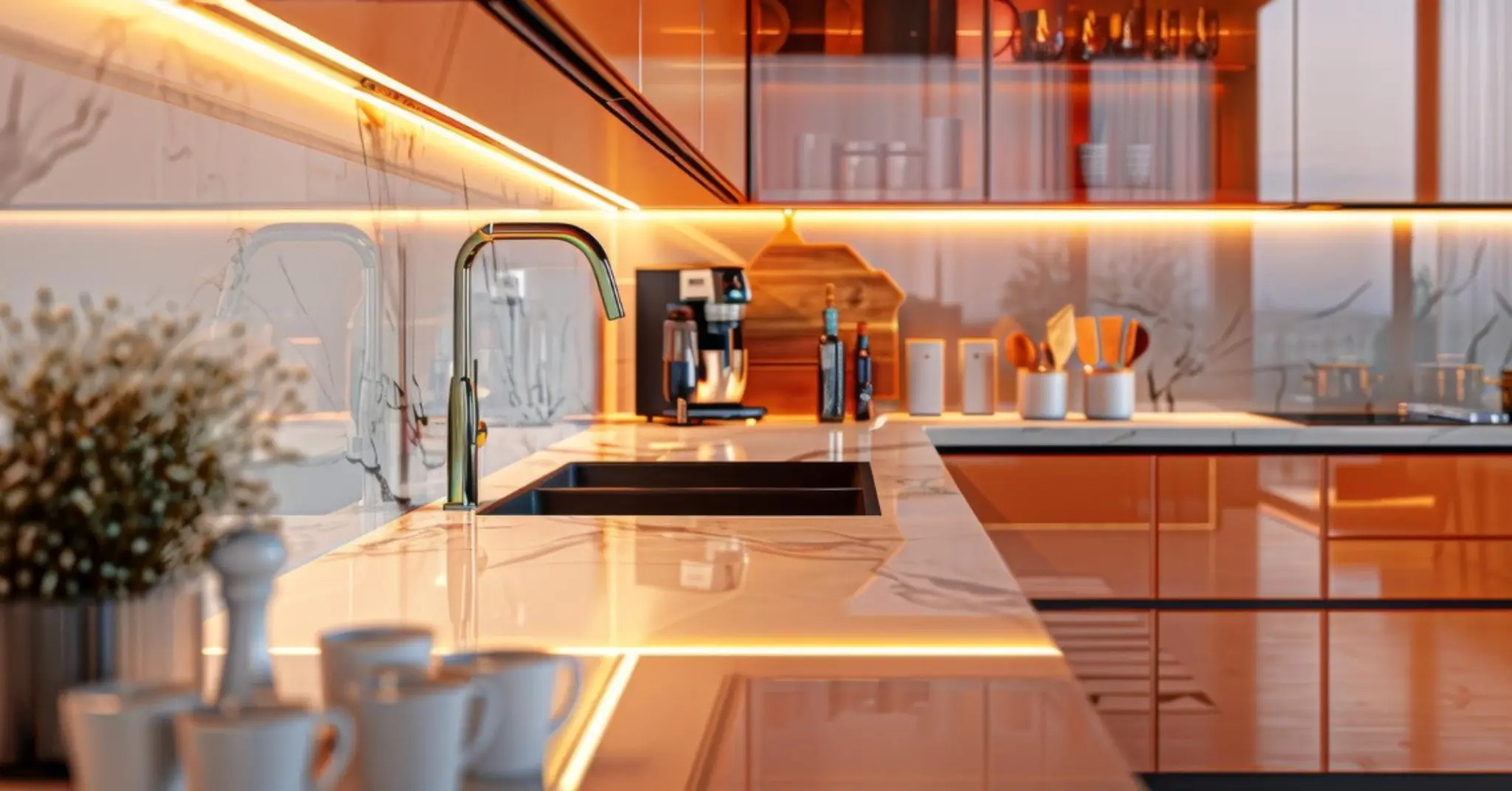
Interior Design Tip: Modernize these spaces with sleek surfaces, integrated storage, and ambient lighting that complements tech-driven features.
8. Biophilic Design Meets Smart Living
Biophilic design- bringing nature indoors- is being enhanced with technology for wellness-focused living.
Examples Include:
- Automated irrigation systems for indoor plants
- Smart lighting that mimics natural circadian rhythms
- Living walls with app-controlled humidity and nutrient delivery
Interior Design Tip: Combine greenery with intelligent lighting and air-purifying systems for a tech-enabled, wellness-focused design.
9. Data-Driven Space Optimization
With the rise in remote work and compact urban living, optimizing space is more important than ever. Tech is offering real-time data to guide decisions.
Motion & Occupancy Sensors
These devices track how people use different rooms and can inform design adjustments such as moving furniture, creating multi-use zones, or improving lighting.
AI-Powered Layout Tools
AI tools assess dimensions, lighting, and usage patterns to recommend optimal furniture placement or suggest layout changes.
Interior Design Tip: Use data insights to design highly functional spaces that adapt to the client’s evolving needs.
10. Future Trends to Watch
As technology continues to evolve, we can expect the following trends to take root in modern housing design:
Smart Materials
Self-healing concrete, color-changing walls, and shape-shifting furniture are in the early stages but promise to redefine home environments.
Digital Twins
Imagine having a virtual model of your home that updates in real time to reflect changes in temperature, air quality, or structural stress. This could become a standard for luxury housing.
Robotics in Home Management
From robotic vacuums to AI-powered kitchen assistants, robots are beginning to assist in daily chores and home maintenance.
Final Thoughts
As homes get smarter, interior designers have an exciting new responsibility- to merge form and function in a way that celebrates technology without letting it overshadow aesthetics.
The challenge is not just to incorporate new gadgets but to design spaces that feel human, warm, and intuitive.
Whether it’s choosing smart lighting that enhances mood or curating furniture that doubles as tech hubs, the designer’s role has never been more critical.
Technology is not replacing creativity- it’s enhancing it. And in doing so, it’s helping us build homes that are not only stylish but also smarter, safer, and more sustainable.
FAQ’s
1. How is smart home technology influencing interior design?
Smart home technology is shaping interior design by emphasizing seamless integration. Designers are now creating layouts that hide wires, accommodate smart devices, and offer intuitive control systems, all while maintaining aesthetic appeal.
2. Are tech-enabled homes more expensive to design?
While initial costs can be higher due to smart devices and system installations, tech-enabled homes often lead to long-term savings through energy efficiency, automation, and reduced maintenance.
3. What are the must-have technologies for a modern home in 2025?
Some must-haves include smart lighting, AI-powered thermostats, voice-controlled assistants, integrated security systems, and IoT-enabled appliances- all of which enhance comfort, safety, and efficiency.